2012年1月8日星期日

100-2學期《方法與實踐》(2012.1.11讀本內容更新)

sys_1048_2137230_39630 
2012.1.11暫定版課綱下載這兒
課程目標與說明
主要以人文社會學術方法學的訓練為主,介紹多樣與當代的社會文化理論,選讀重要作者的經典文章,分析其理論架構與方法,課程分為兩大主軸:一為從人文學科的理論層次,探究當代文化研究議題:藝術與社會、空間文化、現象學、文化工業、日常生活美學、性別與族群議題,強調人文學科跨領域的整合訓練;二為從社會學科的方法研究,探討在全球化、觀光化、解殖後的後現代情境,當代詮釋文化人類學新的研究方法與議題,從哲學、書寫、報導人、田野場域提出文化批判及其與大眾文化、文化認同的關聯性。介紹人文社會理論方法學的研究工具,使學生能應用於論文的理論研究與探討。

本課程設有專門教學網站,並委由本課程助理維護,每週定期更新網頁內容,含當週導讀文本、討論主題、相關閱讀資料。課程結束後一週內,整理該週課程提問與討論紀錄並公告上傳,以開放學術資訊意見交流。


教學評量
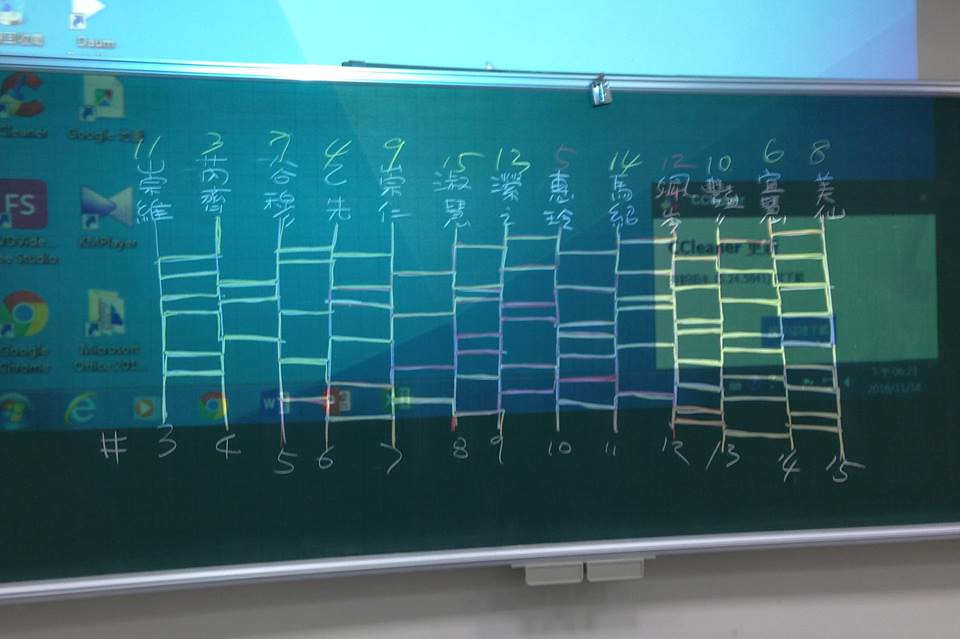
1. 每位同學每週上課前繳交一頁當週讀本心得報告;同時每位同學自行負責本學期教材的導讀若干次。每次導讀不超過20分鐘(即約4,000-5,000字)。以書寫方式導讀。(暫定如此,看情況而定。)
2. 期中報告(人文學主題)內容限讀本教材範圍,口頭及書寫報告,5000字以上,題目需事前與老師討論。
3. 期末報告(人類學/社會科學主題)內容限讀本教材範圍,題目以自行「出題」方式於第15週上課前上傳課程網頁繳交,並於課堂上口頭簡要報告。書寫報告則於第16週繳交。期末報告5-7頁(至少正文6000字)。作業請勿遲交。

成績評定為導讀(%);期中報告(50%);期末報告(50%)

課程規劃及閱讀書目︰


週次
日期
主講人
研讀內容
討論議題
1
2012.2.21
課程概要與介紹
2
2012.2.28
國定假日
3
2012.3.6

1.Schapiro, Meyer.1994. “ On some problems in the semiotics of visual artfield and vehicle in image-signs.  in Theory and philosophy of art: style, artist, and society, pp.7-35. New York: George Braziller.
2.Schapiro, Meyer. 1994. “ Style,  in Theory and philosophy of art: style, artist, and society, pp.35-87. New York: George Braziller.
藝術與社會
4
2012.3.13

1. Merleau-Ponty, Maurice ,1998, “The Body,Phenomenology of perception,pp.67-202. London and New York: Routledge.
“Experience and objective thought. The problem of the body. pp.67-72.
“The Body as Object and Mechanistic Physiology. pp.73-89.
“The Experience of the Body and Classical Psychology. pp.90-97.
“The Spatiality of One’s own Body and Motility. pp.98-147.
“The Synthesis of One’s own Body. pp.148-153.
“The Body in its Sexual Being. pp.154-173.
“The Body as Expression, and Speech. pp.174-202.
2.梅洛龐蒂(龔卓軍譯),2007,《眼與心》,台北市:典藏藝術家庭。(參考閱讀)
梅洛龐帝現象學
5
2012.3.20

1. Benjamin, Walter, 2002,Paris, the Capital of the Nineteenth Centuryin Walter Benjamin, Selected Writings, volume 3. 1935-1938, translated by Edmund Jephcott, Howard Eliand and others, pp.32-49, Edited by Howard Eliand and Michael W. Jennings, Cambridge, Massachusetts and LondonHarvard University Press.
2.Benjamin, Walter, 2002,Exchange with Theodor W. Adorno on the Essay “Paris, the Capital of the Nineteenth Century”in Walter Benjamin, Selected Writings, volume 3. 1935-1938, pp.50-67, Edited by Howard Eliand and Michael W. Jennings, Cambridge, Massachusetts and LondonHarvard University Press.
3.Benjamin, Walter, 2002, “Berlin Childhood around 1900” in Walter Benjamin, Selected Writings, volume 3. 1935-1938, translated by Edmund Jephcott, Howard Eliand and others, pp.344-413, Edited by Howard Eliand and Michael W. Jennings, Cambridge, Massachusetts and LondonHarvard University Press.
班雅明與文化空間

6
2012.3.27
盧玉珍
1. Adorno, Theodor, and Max Horkheimer. 1999. The Culture Industry: Enlightenment as Mass Deception. In The Cultural Studies Reader, edited by S. During. New York: Routledge.
2. Adorno, Theodor W. Fall .1975. Culture Industry Reconsidered. New German Critique
3.
阿多諾,1998,《文化工業再探. In 文化與社會》,新莊: 立緒。
4.
朱元鴻,2000<文化工業:因繁榮而即將作廢的概念>《文化業:文化生的結構分析》。台北:遠流。
5. Cazdyn, Eric. 2003. Uses and Abuses of the Nation: Toward a Theory of the Transnational Cultural Exchange Industry. In Globalization: Critical Concepts in Sociology. New York: Routledge.
6.
盧玉珍,2011,〈街頭「飆」舞的期現代性意涵:我尬舞,故我在〉《運動文化研究》17,頁7-56
文化工業與啟蒙

7
2012.4.3

1.De Certeau. 1984. The Practice of Everyday Life. Translated by Steven Rendall. pp.1-130, California:University of California Press.
“Part I: A Very Ordinary Culture. pp.1-42.
“Part II: Theories of The Art of Practice. pp.43-90.
“Part III: Spatial Practices. pp.91-130.
2.瓦爾德 (Graham Ward)(林心如譯),2009,《塞杜文選》,台北:桂冠出版。(參考閱讀)
日常生活美學
8
2012.4.10
賴淑娟

1. Butler, Judith. 2006.“Women as the subject of feminism”, “Bodily inscriptions, Performative, Subversions” ,  In Gender Trouble: Feminism and the Subversion of Identity. pp:2-7,175-193. New York: Routledge.

2. Mohanty, Chandra. 1991. “Under Western Eyes: Feminist Scholarship and Colonial Discourses.” In Third World Women and the Politics of Feminism, edited by C.Mohanty, A. Russo and L. pp:51-80.Torres. Indiana University .

3. Collins, Patricia Hill. 2008. “The Politics of Black Feminist Thought”, ”The Power of Self-definition” Black Feminist Thought: Knowledge, Consciousness, and the Politics of Empowerment . pp:3-18,91-114. New York : Routledge.

性別與後殖民
9
2012.4.17
期中課程評量
10
2012.4.24
羅正心
備註:以下讀本為必讀;為選讀。
Good, Byron. 1994. Medicine, Rationality, and Experience: An Anthropological Perspective. Cambridge: Cambridge University Press.
醫療人類學
11
2012.5.1

Micheelsen, Arun. 2002. “‘I don’t do systems.’ An interview with Clifford Geertz,” in Method & Theory in the Study of Religion (14)1:2-20.
Joseph Errington. 2011. “On Not Doing Systems,” in Interpreting Clifford Geertz.
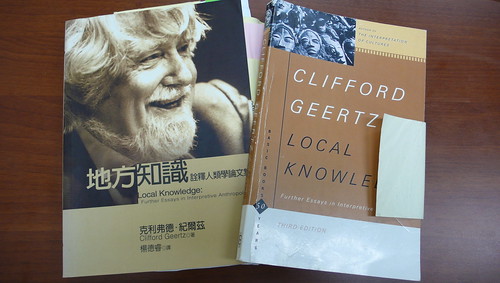
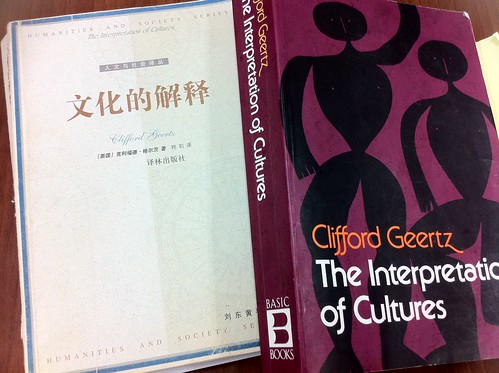
Clifford Geertz
1. Religion as a Cultural System (1973)
2. Ideology as a Cultural System (1973)
3. Common Sense as a Cultural System (1983)
4. Art as a Cultural System (1983)
作為文化體系與「我不研究體系」
12
2012.5.8

Clifford Geertz. 1984. “Anti Anti-Relativism,” in American Anthropologist (86)2:263-278.
Clifford Geertz. 1988. Works and Lives. ch1, ch6
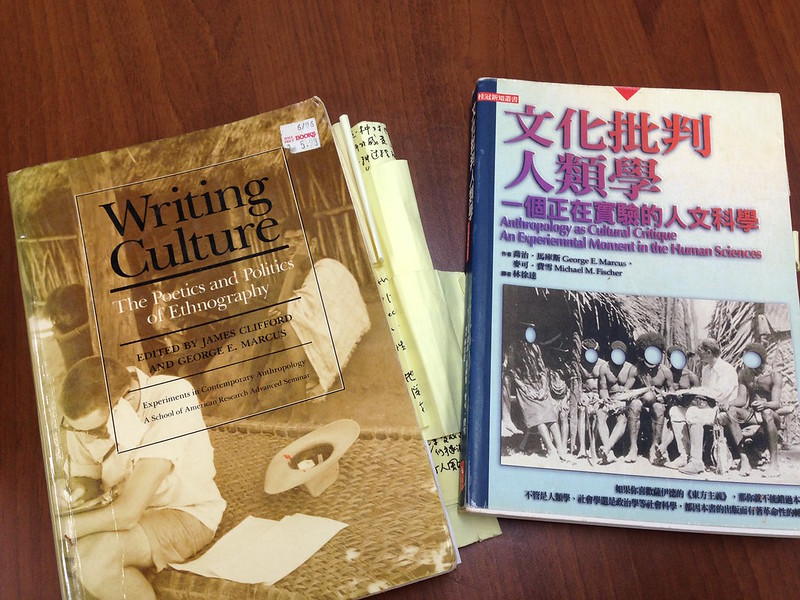
Paul Rabinow. 1986. “Representations are Social Facts: Modernity and Post-Modernity in Anthropology,” in Writing Culture: The Poetics and Politics of Ethnography. James Clifford and George E. Marcus, eds., pp. 234-261. Berkeley: University of California Press.
置身現場
Being There/ Being Here

13
2012.5.15

Johannes Fabian. 1983. Time and the Other: How Anthropology Makes Its Object. (閱讀範圍TBD
Arjun Appadurai. 1988. “Putting Hierarchy in Its Place,” in Cultural Anthropology 1 (3):36-49.
Vicent Crapanzano. 1986. “Hermes’ Dilemma: The Making of Subversion in Ethnographic Description,” in Writing Culture: The Poetics and Politics of Ethnography. James Clifford and George E. Marcus, eds., pp. 51-76. Berkeley: University of California Press.
民族誌凝視
自我與他者
14
2012.5.22
葉秀燕
Fortier, A-M. 1998. “Gender, ethnicity and Fieldwork: A Case Study,” in Clive Seale, ed. Researching Society and Culture. Pp.48-57. Sage.
田野中的性別與族群
15
2012.5.29

George Marcus and Michael Fischer. 1986. Anthropology as Cultural Critique.
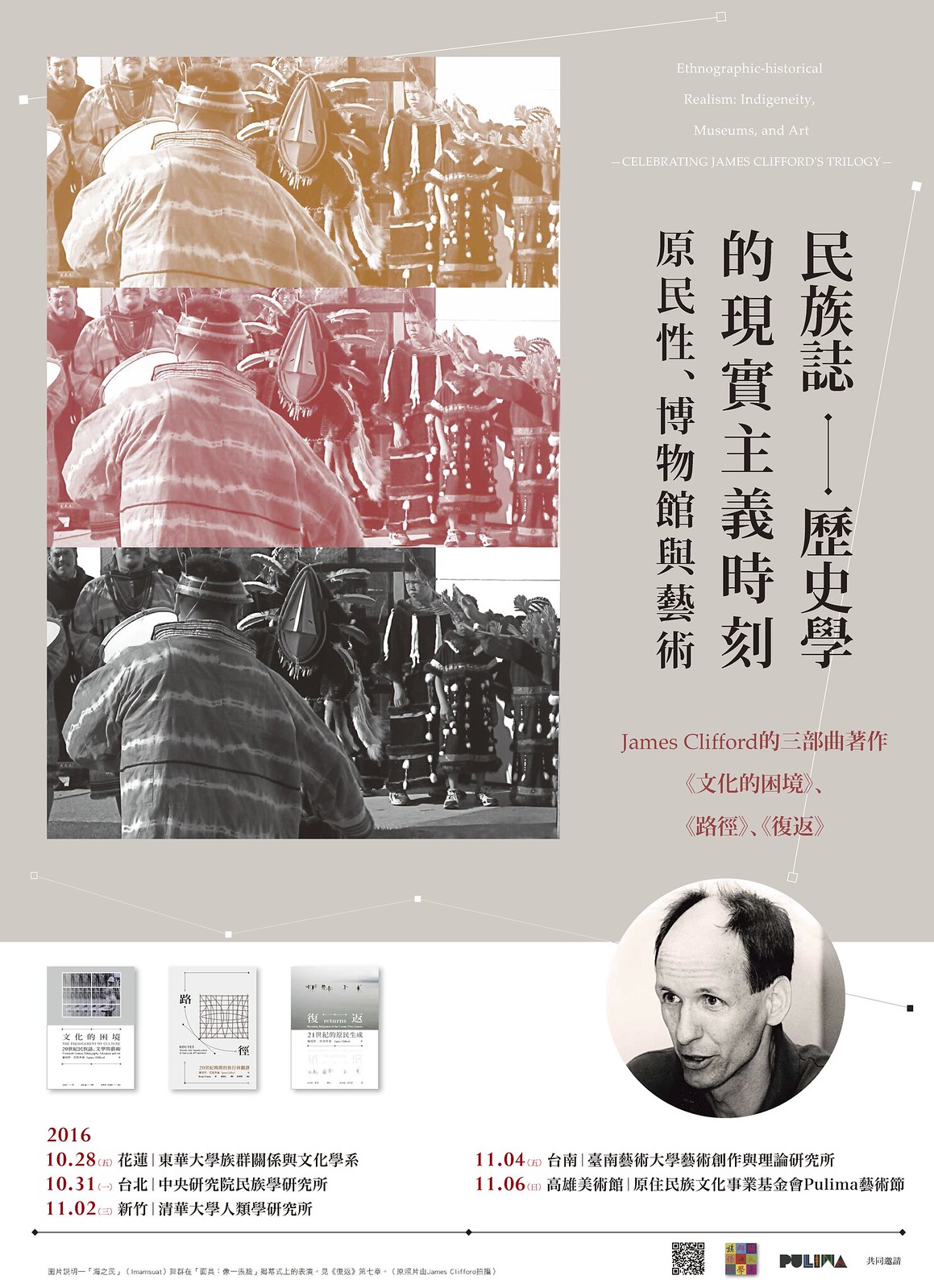
James Clifford. 1986a. “Introduction: Partial Truths,” in Writing Culture: The Poetics and Politics of Ethnography. James Clifford and George E. Marcus, eds., pp1-26. Berkeley: University of California Press.
James Clifford. 1986b. “On Ethnographic Allegory,” in Writing Culture: The Poetics and Politics of Ethnography. James Clifford and George Marcus, eds., pp98-121. Berkeley: University of California Press.
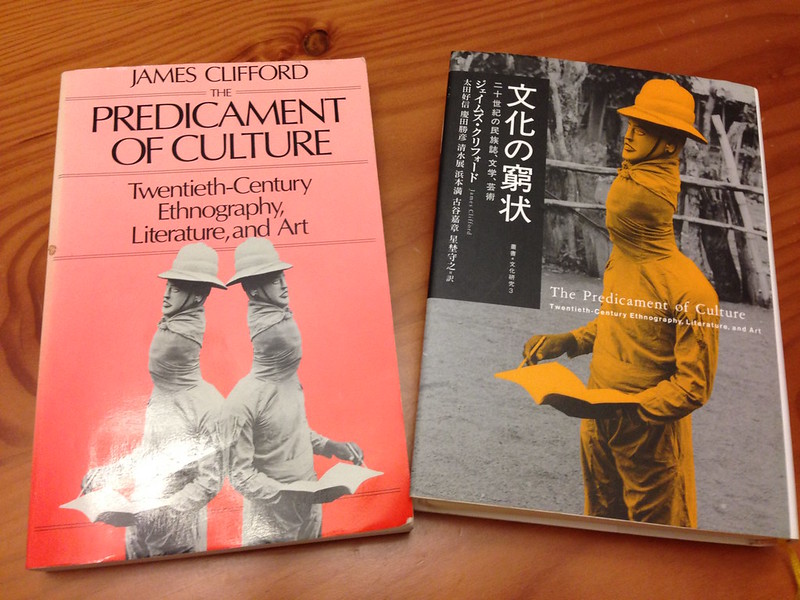
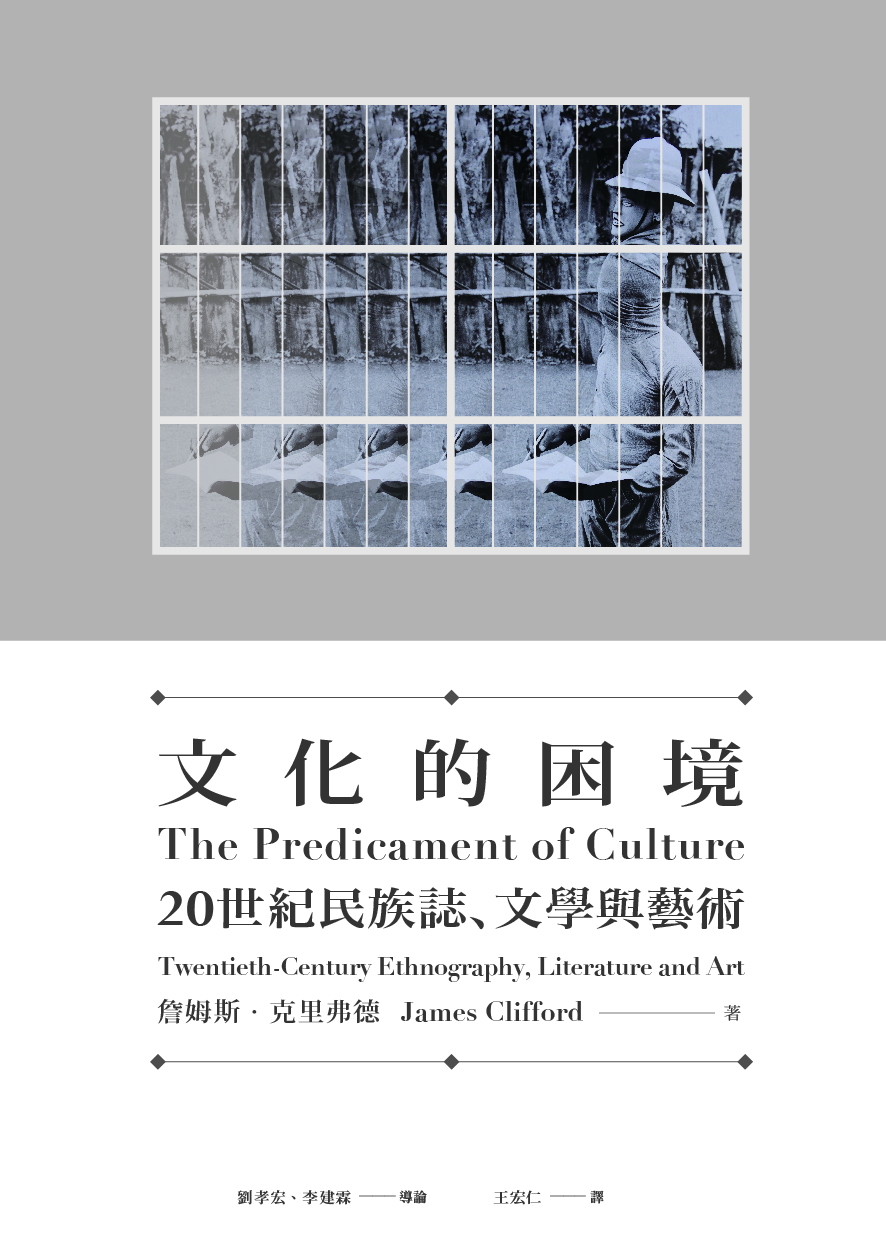
James Clifford. 1988a. “On Ethnographic Authority,” in The Predicament of Culture, pp21-54.
James Clifford. 1988b. “On Ethnographic Surrealism,” in The Predicament of Culture, pp117-151.
James Clifford. 1990. “Notes on (Field)notes,” in Fieldnotes: The Makings of Anthropology,” pp47-70.
書寫職權與人類學諷刺
16
2012.6.5

Akhil Gupta and James Ferguson. 1997. “Discipline and Practice: ‘The Field’ as Site, Method, and Location in Anthropology, in Anthropological Locations: Boundaries and Grounds of a Field Science, pp1-46.
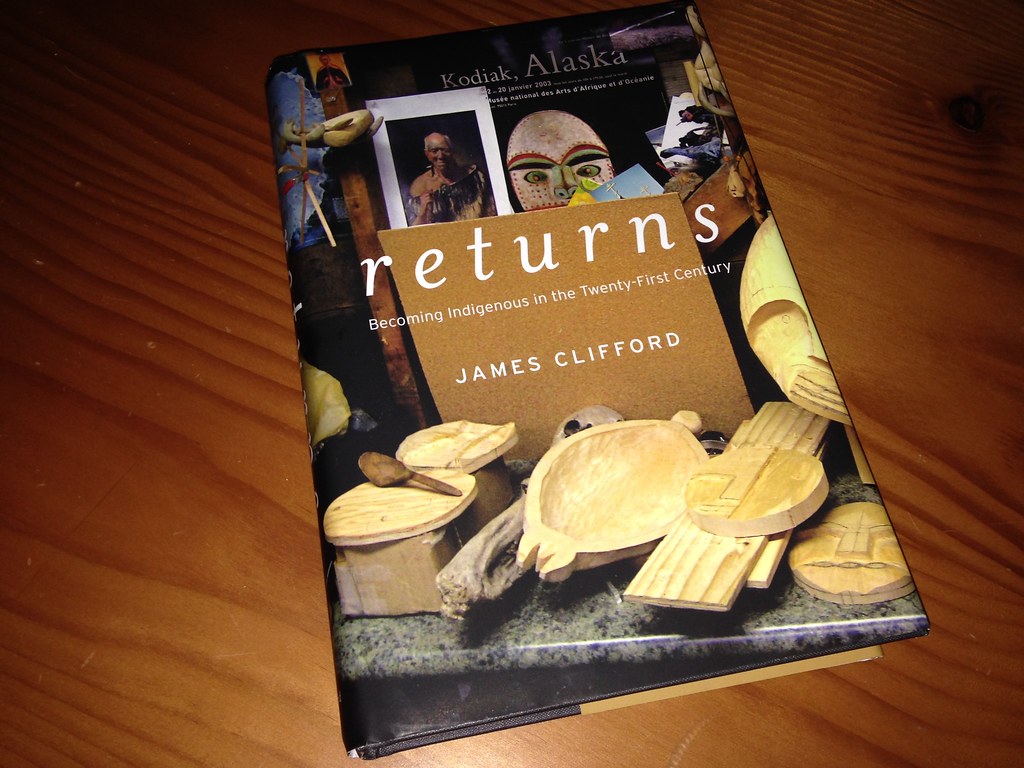
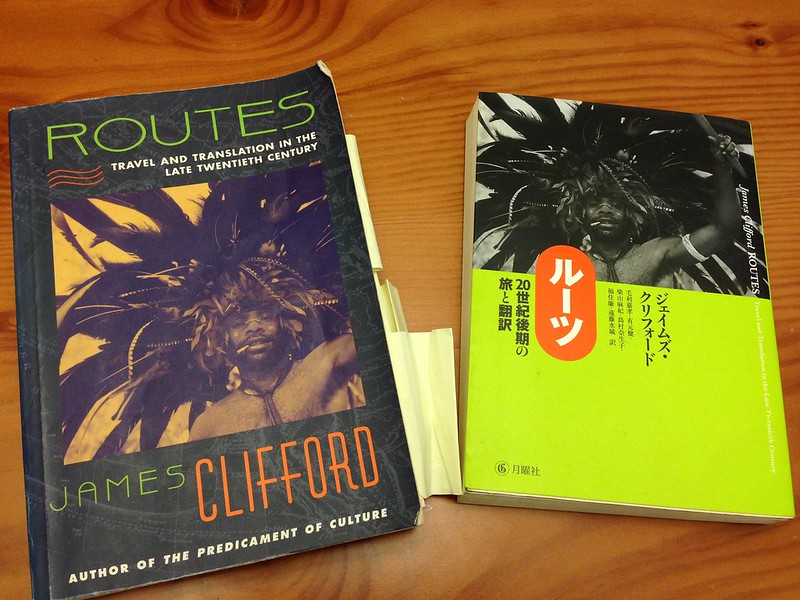
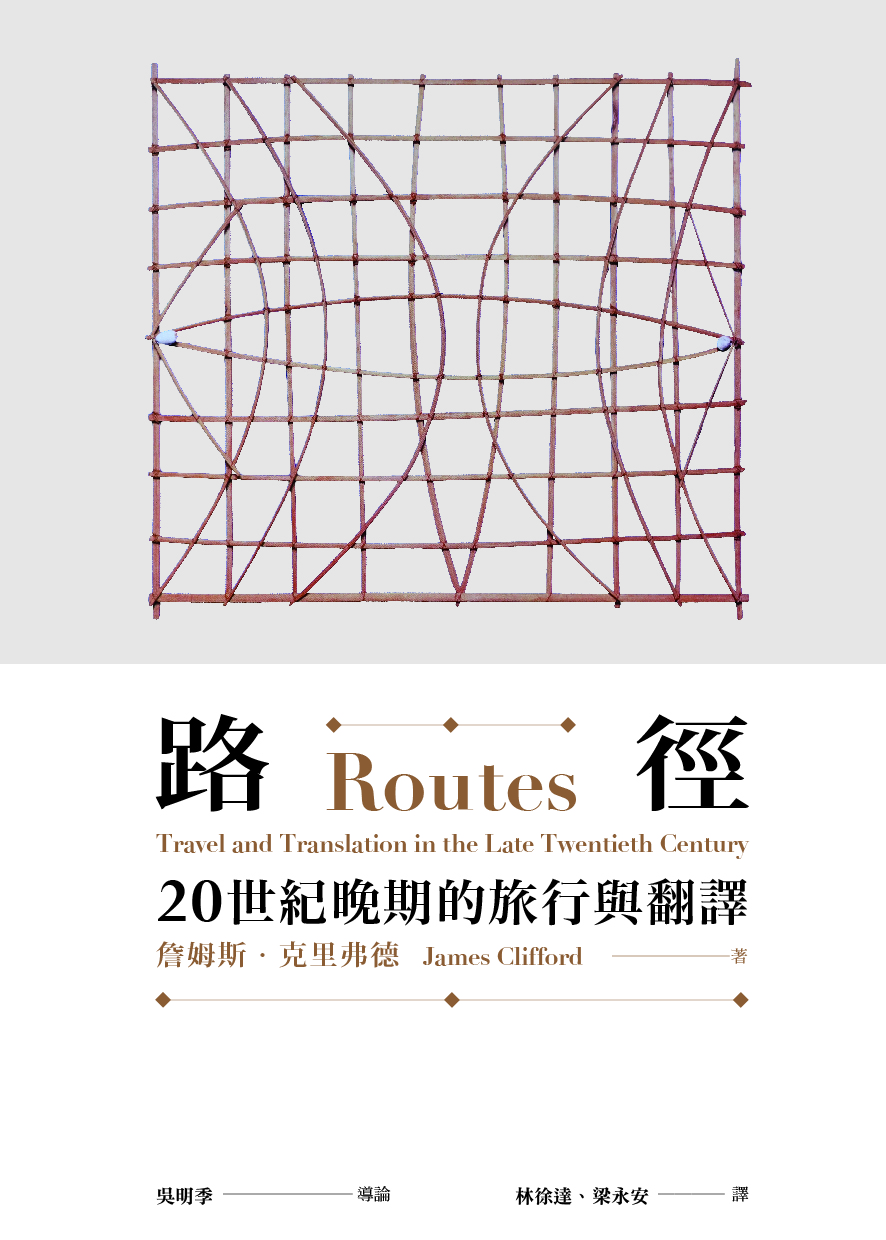
James Clifford. 1997. “Spatial Practices: Fieldwork, Travel, and the Disciplining of Anthropology,” in Routes: Travel and Translation in the Late Twentieth Century,” pp52-91. 
Akhil Gupta and James Ferguson. 1997. “Beyond ‘Culture’: Space, Identity, and the Politics of Difference,” in Culture, Power, Place: Explorations in Critical Anthropology, pp33-51.
George Marcus. 2009. “Introduction: Notes toward an Ethnographic Memoir of Supervising Graduate Research through Anthropology’s Decades of Transformation,” in Fieldwork in not What It Used to Be: Learning Anthropology’s Method in a Time of Transition. James D. Faubion and George E. Marcus, eds., pp1-34.
James D. Faubion. 2009. “The Ethnic of Fieldwork as an Ethnics of Connectivity, or The Good Anthropologist (Isn’t What She Used to Be),” in Fieldwork in not What It Used to Be: Learning Anthropology’s Method in a Time of Transition. James D. Faubion and George E. Marcus, eds., pp145-164.
當代人類學田野場域
17
2012.6.12
期末作業報告
18
2012.6.19
期末回顧與檢討

week 15--後葛茲時代


Things are thus not, or at least in my view they are not, coming progressively together as the discipline moves raggedly on. And this, too, reflects the direction, if it can be called a direction, in which the wider world is moving: toward fragmenta- tion, dispersion, pluralism, disassembly, -multi, multi-, multi-. Anthropologists are going to have to work under conditions even less orderly, shapely, and predictable, and even less susceptible of moral and ideological reduction and political quick fixes, than those I have worked under, which I hope I have shown were irregular enough. A born fox (there is a gene for it, along with restlessness, elusiveness, and a passionate dislike of hedgehogs), this seems to me the natural habitat of the cultural ... social ... symbolic ... interpretive anthropologist. Interesting times, an inconstant profession: I envy those about to inherit them.--AN INCONSTANT PROFESSION: The Anthropological Life in Interesting Time (2002)

Well, you can see the problem. Merely in presenting untoward, out-of category material, material not easily bent to proprietous shape, one risks being branded an enemy of progress, or worse. But despite all the hollering, the fear here is not really of "indigenous illiteracy and superstition" or the glamorization of barbarism. The most vain and self-indulgent of multi culturalized Western authors (and I am not the worst), smitten by exotic customs and dubious of some of our own, is not going to try to sell widow burning to anyone. And the Balinese are neither illiterate nor, as these things go in the world, particularly profligate, misogynous, or superstitious. The fear here is that in entangling our own sense of life and its "classic representations" with ones more than a little at angles to it and to them, we will so weaken our convictions as to make us unable to sustain them and impress them with sufficient force on the world at large. It is the very destabilization, the confusion of impulses that my honest sea captain felt that in quoting him I wanted my readers to feel too. Why do we teach Jane Austen, or Icelandic sagas, or Hindu funerals? Just that: to wound our complacency, to make us a little less confident in and satisfied with the immediate deliverances of our here-and-now imperious world. Such teaching is indeed a subversive business. But what it subverts is not morality. What it subverts is bluster, obduracy, and a closure to experience. Pride, one could say, and prejudice. --A Strange Romance: Anthropology and Literature (2003)

We are, most all of us now, not just anthropologists, folklorists, or connoisseurs
of the odd and arcane, thus somewhat employed. The jumbling of the
world’s catalogue is, by now, general to the point of near universality. Cheekby-
jowl contrast, not only of religious allegiance, but of ethnic background,
‘race’, language-community, place of origin, and God knows what other
allegiance or marking people may contrive to distinguish themselves from one
another and persuade themselves of their own solidity, is pervasive, not just in
Western Europe and North America, towards which migration has recently
been perhaps the most marked, but also in Asia, Africa, and Latin America,
drawn with increasing force and inevitability into the whirl of the world’s
variety. It is, of course, possible that all this here-we-are-and-there-we-are will
in time sort itself out and large, neat, hermetic blocs of cultural commonality,
what we used to imagine ‘nations’ to be, will either re-emerge or be
created anew. But, so far as I can see, there is at the moment precious little
sign of it. Jumble is with us late and soon.--SHIFTING AIMS, MOVING TARGETS: ON THE ANTHROPOLOGY OF RELIGION (2005)

2011年12月17日星期六

week 14--反反相對主義

然而,正因為民族誌異地研究的發現,今日的人類學相對於古典時期的職責,反倒扮演著逆向的先鋒角色,自我解構地撤除了西方對於自身理性、文明、信仰等原有認識:「世界並不單純區分為虔敬與迷信;叢林中存在著雕塑,沙漠中也有繪畫;政治秩序可以不需要中央集權,而原則正義也不見得需要編撰式的法典規則;理性規範並沒有固著於希臘時代,而道德演化也沒有在英國圓滿達成」。今日人類學對於異文化的接觸認識,已經普遍地轉換為對於自身社會的瞭解並給予批判,它使我們所獲得的不是侷限於遙遠民族的生物性或社會性調查,或是部落文化的細緻說明,相反地,通過部落的地方知識,拓展了當代對於自身社會的認識。這或許正是當代詮釋人類學有別於其他人文社會科學的另類職責:人類學的現代任務不僅是陳述異文化脈絡中的在地觀點,而是同時地去除了我們自身文化價值的穩定性(destabilization)。Geertz以為這種去除原先穩固的理解常識之認識論,企圖「損害我們原有的自滿,並且自此刻的傲慢世界中直接釋放出來,使得我們不再如此自信與滿足。於是,人類學是一項帶有顛覆性質的行業:它所要顛覆的不是道德層次上的問題,而是狂暴、執拗頑固的封閉經驗」。

2011年12月16日星期五

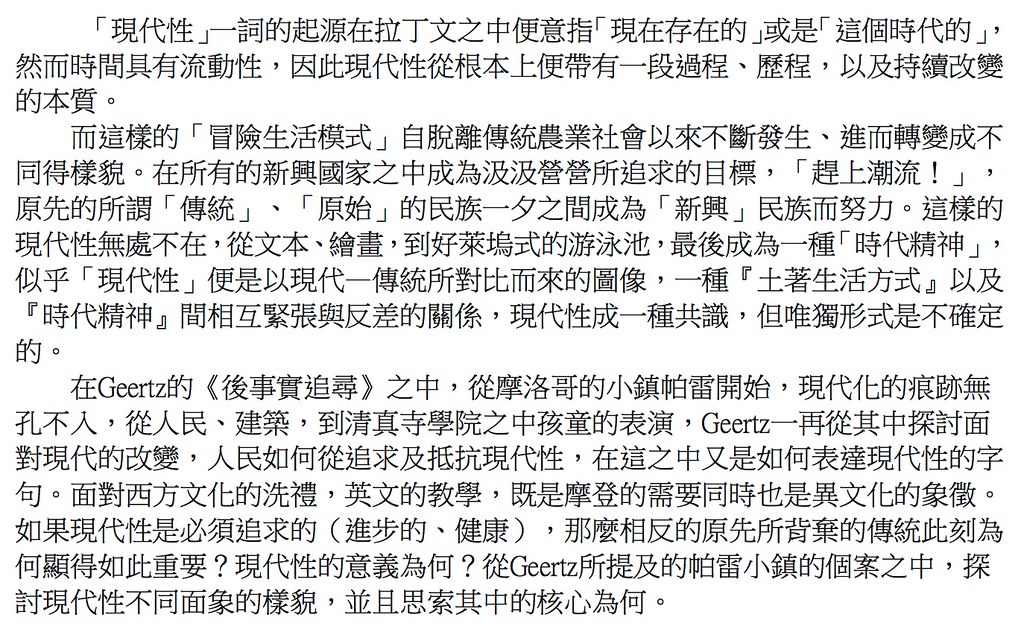
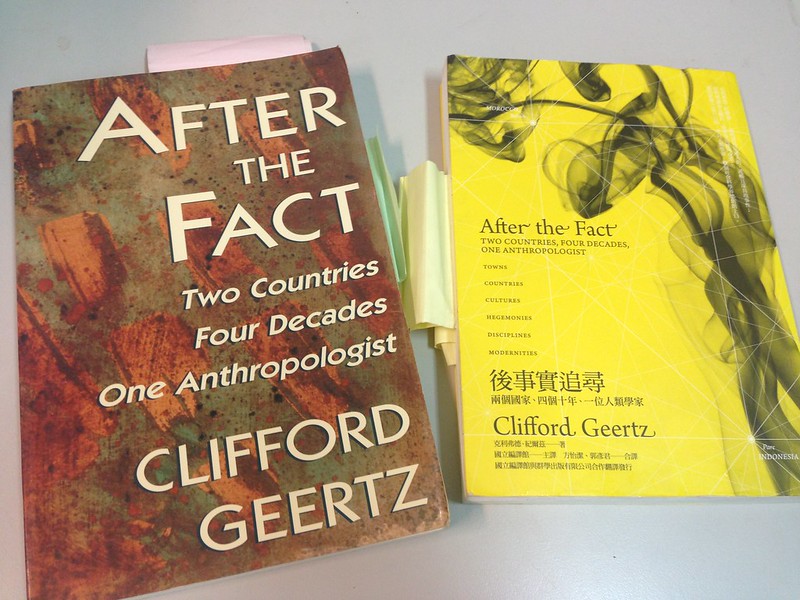
week 13--後事實追尋


人類學在人文科學中恐怕最常於自我提問「這門學科究竟是什麼?」,同時給予的答覆內容並非有關一門學科知識的描述,卻像是總體式的世界觀,或是類似信念的聲明(Geertz, 1995:97)。在這門學科所持續承諾和反對的信念中,人類學帶來一項關於尋找新文明、探求世界觀的學術期許,以便於描繪、揣摹、突顯那一個遙遠邊緣族群的生活方式,並且與我們自身社會相互對照。在古典時期,這種比較自身社會與他處(here and there的動機,或許來自西方世界對於認識異文化的渴望,其中部分充斥著宗教般的熱忱,好讓現代文明點燃啓蒙之光,以及來自一門新興學科對於自身研究主題含有若干浪漫冒險成分的天真抱負。帶有極大程度的諷刺意味兒——「或許這是一種醜行,又或者這正是此項學科訓練的長處」(同上引)——這門學科的職責正是破除原先認為理所當然、根深蒂固的刻板印象、先入為主的價值判斷,或是阻擋自我中心式的偏見與誇耀。

2011年12月12日星期一

期末考題公佈

◎請以《後事實追尋》(After the Fact, 1995)、《文化批判人類學》(Anthropology as Cultural Critique, 1986)、《人類學場域》第一章(Anthropological Locations, 1997)這三本讀本討論「多點田野工作」(multi-sited fieldwork),其中包括

(1)田野工作對於葛茲的意義是什麼?
不要解釋田野工作是什麼,或者對人類學有多重要?這些我們都懂到爛掉了! 所以網路上那些陳年資訊別浪費時間瀏覽了。直接說明田野工作對於葛茲有何意義?(首先你得懂什麼是「意義」→文化的意義是獲得的,不是與生俱來。)
(2)解釋何謂「多點田野工作」概念?
(3)當代人類學研究何以需要「多點田野工作」實踐?

期末報告必須符合底下所有要求(意思是缺一不可):
1. 至少5000字,絕不能超過5頁。每一題長度最多不能超過2頁
2. 報告需以完整的句子書寫;每一論述主題須適時分段。
3. 必須出現上述三本讀本的話語引用,並且使用正確的引用格式。
4. 12/30上課前繳交。
5. 註明字數。
6. 這個題目很笨(我很不喜歡定義型問題),所以不要抄襲也不行使用網路資訊。
有問題請在這兒發問,我不在私人郵件中回答任何問題。我會在這兒回答。

2011年12月2日星期五

Week 12--文化窘境


自歐洲的崩潰至一個野蠻狀態,以及對進步的意識型態的明顯淪喪之後,自一個戰塹經驗與對英雄主義與勝利的官方語言二者之間所產生的深層裂隙產生之後,以及自從十九世紀的浪漫式修辭的慣習所證明其自身對呈現戰爭現實的無能之後,這個世界便永遠成為超現實的。